
Going Conditions at Ascot: How Ground Shapes Your Betting
 Available in US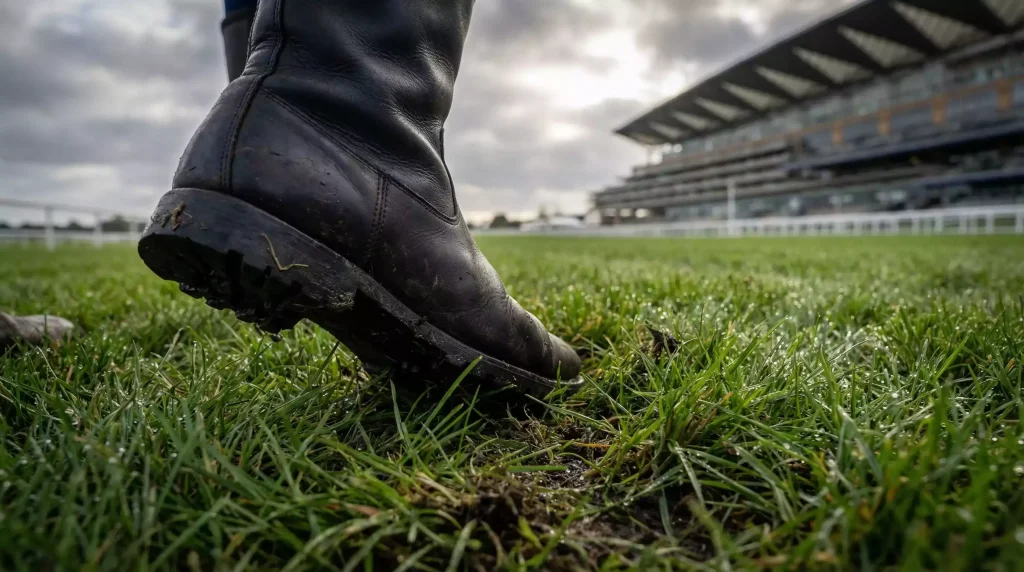
Ground as the Great Leveller
Going conditions at Ascot determine more outcomes than casual punters acknowledge. A horse who travels sweetly on good ground may labour through soft. A front-runner who dominates on firm may find the extra energy required on yielding terrain saps their finishing kick. Understanding how ground affects results—and how to interpret going reports accurately—separates informed bettors from those who treat conditions as an afterthought.
Royal Ascot unfolds across five days in mid-June, a period when British weather remains thoroughly unpredictable. Some years deliver wall-to-wall sunshine, producing ground that rides quick. Others bring afternoon thunderstorms that transform the track within hours. The 35 races spread across the week may run on materially different ground from Tuesday to Saturday, demanding adaptability from both connections and bettors.
Ascot has invested significantly in drainage and ground management. The track recovers faster than many British courses, and the groundstaff work to maintain consistency. Yet even with modern technology, heavy overnight rain alters the playing field. As Felicity Barnard, Ascot’s Chief Executive, noted, “the focus at Royal Ascot is on the quality of experience for guests and horses alike.” That quality depends substantially on presenting ground that allows the best horse to win—but weather remains beyond anyone’s control.
Soft Ground at Ascot: Draw Amplification
Soft ground at Ascot amplifies existing biases rather than creating new ones. On the straight course, analysis from At The Races confirms that softer going increases the advantage of racing towards the stands’ side. Water drains unevenly; certain strips retain moisture while others shed it. Horses drawn middle-to-high can navigate the better ground while those drawn low may fight through heavier terrain.
The stamina test intensifies on soft ground. Horses who stay their trip comfortably on good ground may struggle when conditions demand extra effort per stride. This affects betting calculations directly. A horse stepping up in trip should be viewed with additional scepticism if soft ground is expected—they face two unknowns simultaneously. Conversely, proven stayers whose best form has come on soft become more attractive.
Front-runners face particular challenges. Making the running on soft ground requires sustained effort that drains energy reserves. A horse who leads into the final furlong may have nothing left when challengers arrive. Closers who can conserve energy through the early stages before producing a finishing effort often benefit. Review your selections’ running styles when soft ground arrives; the usual tactics may not apply.
Some trainers excel on soft ground. Their training methods, choice of horses, and tactical approaches suit testing conditions. When soft ground emerges, check whether your fancied runner’s trainer has a strong record in such conditions. A trainer whose string struggles on soft might send runners who have the ability but not the constitution to cope.
Good to Firm: Speed Prevails
Good to firm ground suits speed horses. The surface offers minimal resistance, allowing horses to stride out fully without losing energy to the turf. Sprint races on fast ground often produce quick times and favour those with natural acceleration. The fastest horse in the field has fewer obstacles between their ability and the winning post.
Draw bias diminishes on good to firm ground. Without soft patches to avoid, horses can race wherever their jockeys prefer. Low draws no longer carry the disadvantage they might on soft; high draws no longer offer the premium. This levels the playing field, returning focus to form rather than stall position. In big-field handicaps, which often see significant draw bias on soft ground, good to firm conditions make the race more of a true test.
Firm ground raises soundness concerns. Horses with joint issues, those returning from injury, or those whose action suggests they prefer give underfoot may underperform. Trainers sometimes withdraw horses when ground firms up beyond comfort levels. Watch the morning declarations closely when firm ground is expected—late withdrawals can signal trainer concern about suitability.
Times become meaningful on fast ground. Comparing sectional times and finishing times across races run on the same day offers genuine insight. A horse who runs faster raw time in a later race may be of higher quality than one whose earlier victory looked visually impressive. On soft ground, such comparisons lose validity; on good to firm, they gain it.
Checking Going Reports: Official vs Reality
Official going reports provide a starting point but require interpretation. The clerk of the course measures ground conditions using a penetrometer, which records how easily a probe sinks into the turf. This produces standardised readings that translate into official descriptions: firm, good to firm, good, good to soft, soft, heavy. The system is consistent but imperfect.
Conditions can vary across the track. The straight course may ride differently to the round course. The rail may ride differently to the centre. Official going represents an average, not a uniform description. Experienced jockeys walk the track before racing and share observations with connections. That intelligence influences tactics and sometimes betting—a horse whose jockey reports good ground near the stands’ rail may race differently than if they had found uniform soft.
Going can change during the meeting. A sunny morning dries ground; an afternoon shower softens it. The going description announced at 8am may not match conditions for the 4pm race. Check updates throughout the day. Most racecourses issue revised going descriptions before each race if conditions have changed materially.
Weather forecasts matter as much as current going. If rain is expected during racing, ground will deteriorate. If sun is expected, ground will dry. Anticipate how conditions might change rather than betting solely on the morning report. A selection who needs good ground might be viable for the 2pm race but risky for the 5pm race if showers are forecast.
Adjusting Selections for Ground
Build going preferences into your form analysis before race week. Note each contender’s record on different ground types. Some horses clearly prefer soft; their form figures read a string of ones and twos on yielding but include failures on good. Others hate soft ground and lose lengths before the race begins. Record these preferences rather than researching frantically on race morning.
Weigh going suitability against other factors rather than treating it as absolute. A horse with a moderate soft-ground record but exceptional class might still win on soft against lesser rivals. A proven mudlark might fail on soft if they lack the ability to beat the field regardless. Ground preference is one input among many, not a standalone verdict.
Be willing to abandon selections. If you identified a strong fancy earlier in the week but ground has shifted against them, discipline demands reconsideration. Stubbornly backing a horse who needs good ground when soft has arrived is not loyalty—it is poor process. Equally, recognise when ground shifts in your favour. A horse you dismissed because of expected firm ground might become attractive if rain arrives.
Track how ground affects your results over time. Keep records not just of wins and losses but of ground conditions for each bet. Patterns may emerge: perhaps you overvalue soft-ground specialists, or perhaps you underrate horses on firm. Data reveals tendencies that intuition obscures. Adjusting for ground becomes more reliable with experience, but only if you study your own record honestly.
Going Conditions at Ascot — More on this topic at ascot races betting.
See also Wesley Ward at Royal Ascot.
