
Buckingham Palace Stakes Betting: The Stall 26 Phenomenon
 Available in US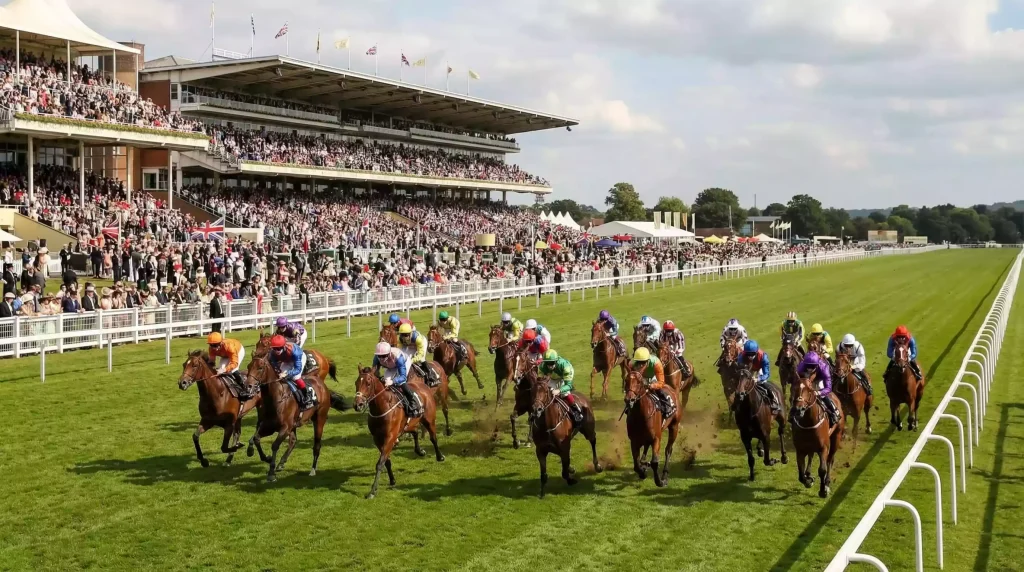
The Stall 26 Phenomenon
The Buckingham Palace Stakes presents one of racing’s most remarkable statistical patterns. This seven-furlong heritage handicap, contested by thirty runners on Royal Ascot’s straight course, has produced results so concentrated by draw position that ignoring the data amounts to wilful negligence. Buckingham Palace Stakes betting demands attention to a phenomenon that defies conventional handicapping assumptions.
Handicap favourites at Royal Ascot generate level stakes profit of +£4.08, suggesting the market prices big-field handicaps reasonably well overall. Yet within that broad category, individual races exhibit specific biases the market sometimes underweights. The Buckingham Palace’s draw pattern represents exactly this kind of exploitable inefficiency—a consistent trend that rewards bettors who adjust their approach accordingly.
Understanding why this pattern exists, how it has manifested historically, and how to incorporate it into practical selection provides genuine edge. The Buckingham Palace is not merely a seven-furlong handicap but a specific test with specific demands that differ from superficially similar races. Approaching it generically sacrifices value; approaching it with awareness of its quirks captures it.
Extreme Draw Bias: 6 from 7
At The Races data reveals an extraordinary concentration: six of the last seven Buckingham Palace winners started from stall 26. Not from stalls in the mid-twenties generally, but from stall 26 specifically. This precision suggests something beyond general high-draw advantage—it points to a specific sweet spot in positioning for this particular race at this specific distance.
Why stall 26? The answer involves geometry and pace distribution across the track. Over seven furlongs on the straight course, horses from extreme high draws must angle dramatically to reach the stands’ rail. Stall 30 faces the longest crossing distance and the most energy expenditure. Stalls 26-28 face shorter angles while still positioning close to preferred ground. Among these, stall 26 appears to offer optimal balance: close enough to the stands’ side to access fast ground quickly, far enough from the extreme outside to minimise crossing distance.
The pattern challenges standard handicapping approaches fundamentally. A horse drawn 26 with moderate form may outperform a superior horse drawn 8. Punters who evaluate form alone miss this dimension entirely. Bookmakers price horses primarily on ability, adjusting modestly for draw. If the actual draw impact exceeds the market’s adjustment, value exists in high-drawn runners at prices that underestimate their positional advantage.
Randomness remains possible. Seven renewals constitute a small sample; statistical flukes occur. Yet the concentration is striking enough to influence betting decisions materially. When uncertain between two runners of similar ability, draw should determine the choice. When considering each-way value, a horse drawn 26 at 20/1 offers more than one drawn 6 at 16/1.
Seven Furlong Specialists
Seven furlongs demands a specific profile. Horses must possess sufficient speed to compete in the early stages without burning reserves, then sustain that speed longer than pure sprinters manage. The in-between nature of the distance suits certain types: sprinters with stamina, milers with pace, or specialists who have found their ideal trip through trial and error.
Course-and-distance form carries additional weight in this race. Horses who have previously won or placed over seven furlongs at Ascot have demonstrated suitability for these exact demands. The track’s characteristics—the width, the camber, the way ground conditions vary across the track—differ from other seven-furlong venues. Previous Ascot experience provides tangible advantage.
Beware horses stretching or shortening from their preferred trip. A pure six-furlong horse stepping up may find the final furlong too demanding. A mile specialist dropping back may lack the early speed to establish position. Both scenarios create vulnerabilities the draw bias might exploit. A moderate seven-furlong specialist drawn well may outperform a higher-rated improper-distance type drawn poorly.
Tactical versatility helps. The ability to race prominently if the pace is slow, or to hold up if it is strong, allows jockeys to adapt to race circumstances. One-dimensional horses—those who must lead or must come from last—face risks when thirty runners compete. Versatile types drawn advantageously combine tactical flexibility with positional edge.
Pace and Positioning Dynamics
Thirty runners create intense early competition for position. Multiple horses will attempt to establish themselves in the first furlong, each jockey knowing that being caught wide without cover invites trouble. The early chaos often persists through the halfway mark before the race settles into clearer shape. How horses navigate this chaos often determines finishing position.
High-drawn horses can establish position toward the stands’ rail without fighting through traffic. They break from stalls already positioned near preferred ground, requiring minimal early manoeuvring. Low-drawn horses face choices: fight immediately for the stands’ rail, accept the far-side position and hope ground conditions are fair, or settle mid-field and seek gaps later. Each choice carries risk.
Closers face particular challenges in large fields. Finding racing room when thirty horses spread across the track requires luck as much as jockeyship. Gaps open and close unpredictably; traffic problems strand otherwise viable contenders. Front-runners and prominent racers avoid this lottery by dictating terms rather than reacting to circumstances created by others.
Pace collapse—when front-runners stack up and slow the race—changes the dynamics. If early fractions are moderate, closers have nothing to chase down, and speed-on-speed battles become finishing sprints. Read the declared field for likely pacemakers. If no genuine front-runner is present, expect a tactical affair where early positioning matters less and finishing speed matters more.
Buckingham Palace Selection
Start with stall 26. If a credible contender draws this position, they deserve serious consideration regardless of other factors. The historical pattern is too concentrated to ignore. Move outward from stall 26, considering stalls 24-28 as the premium zone, then stalls 20-23 as acceptable alternatives. Below stall 20, the draw advantage diminishes significantly.
Within the draw-filtered shortlist, assess form conventionally. Proven seven-furlong ability, recent competitive efforts, trainer suitability for Royal Ascot handicaps, jockey booking quality—standard handicapping criteria apply once draw has established the initial filter. Draw determines eligibility; form determines ranking within the eligible group.
Each-way betting suits this race’s structure. Extended place terms in thirty-runner fields create value opportunities at prices of 14/1 and beyond. A horse drawn 26 at 16/1 offers genuine each-way appeal if their form suggests they belong in the first ten on ability. Combine draw advantage with place probability, and expected value may exceed what the headline price suggests.
Accept that the pattern may not hold in any individual year. Statistical trends describe probabilities, not certainties. A brilliant horse from stall 4 might overcome the disadvantage; stall 26 might fail to produce a winner for once. Betting on patterns means accepting variance while trusting long-term probabilities. The Buckingham Palace rewards those who incorporate draw data systematically rather than treating each renewal as independent.
Buckingham Palace Stakes Betting — More on this topic at ascot races betting.
See also King Edward VII Stakes Tips.
