
Diamond Jubilee Stakes Tips: The Sprint Championship Decoded
 Available in US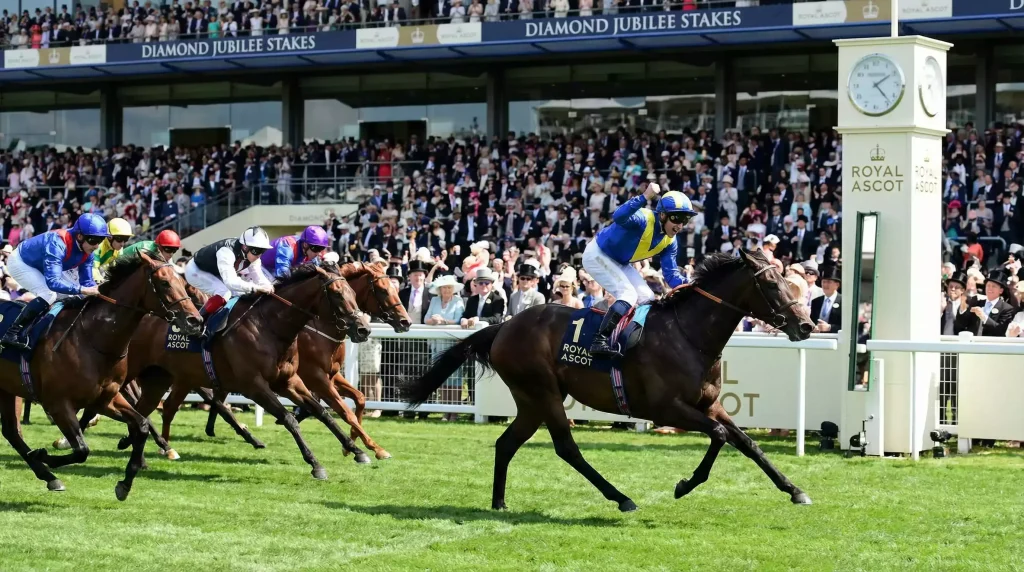
Crowning the Sprint Champion
Saturday at Royal Ascot carries the weight of conclusion. The meeting reaches its climax with crowds exceeding 70,000, an atmosphere thick with anticipation, and a card featuring the Diamond Jubilee Stakes—the Group 1 sprint that crowns the best six-furlong horse in training. Winning here cements a reputation. Losing here, for a short-priced favourite, invites scrutiny that lingers well beyond June.
The Diamond Jubilee Stakes demands speed, pure and abundant. Six furlongs on the straight course leaves no room for tactical hesitation. Horses who need time to warm up, who idle in front, or who lack the constitution to sustain maximum effort find themselves overwhelmed. Champions emerge from this crucible—horses like Blue Point, Starspangledbanner, and Black Caviar have defined eras by winning here.
For bettors seeking Diamond Jubilee Stakes tips, the race offers both opportunity and risk. The market is efficient: Racing Post data shows that 40 of the last 48 Group 1 races at Royal Ascot have been won by horses priced at 6/1 or shorter. The favourite often delivers. But within that pattern, nuances emerge—pace dynamics, draw bias, international form—that create value angles for those who study rather than merely observe.
Speed Figures and Form Requirements
The Diamond Jubilee demands proven Group 1 form. Horses stepping up from handicap company or Group 3 victories rarely possess the acceleration required to compete. Examine each contender’s peak performance rating. If that peak occurred in a Group 1, the horse has demonstrated championship-level ability. If it occurred in a lesser race, scepticism is warranted.
Sprint form lines differ from those in middle-distance racing. A horse beaten three lengths in a Group 1 sprint has lost by roughly half a second—an enormous margin at this level. Conversely, a horse who won a Group 2 sprint by a nose, against genuine rivals, may translate that ability effectively to the Diamond Jubilee. Margins matter less than the level of competition faced.
Recency of form matters more in sprints than staying races. A horse whose best performance came eighteen months ago may have lost a crucial fraction of speed. Sprinters peak sharply and decline faster than stayers. A five-year-old who dominated at three might no longer possess the explosive acceleration that defined their earlier success. Prioritise horses showing current season form that matches or exceeds their career best.
Course form carries weight. Ascot’s straight six furlongs suits certain running styles better than others. Horses who have won or placed at Ascot previously have demonstrated their ability to handle the track’s specifics: the undulations, the camber, the way soft ground affects different parts of the track. A sprinter whose form has come exclusively at Newmarket or York faces unknowns.
Draw and Track Positioning at 6f
Six furlongs on Ascot’s straight course amplifies draw significance compared to longer distances. At The Races analysis shows that ten of twelve straight-course races in 2024 with sixteen or more runners were won from double-figure stalls—middle to stands’ side. While the Diamond Jubilee fields are smaller, the principle holds: horses drawn towards the stands’ rail enjoy a marginal advantage when ground conditions turn soft.
On good ground, the track plays fairer. Horses can establish position wherever they break and race where their jockey prefers. Low draws are not disadvantaged significantly; high draws are not advantaged significantly. The key becomes breaking cleanly rather than starting from a favourable stall. A horse who dwells at the start from stall fifteen loses more than a horse who breaks sharply from stall two.
Pace shapes the race more than draw. In small fields—typically eight to twelve runners for the Diamond Jubilee—early positioning matters less than in cavalry charges. What matters is the overall tempo. If a recognised front-runner sets honest fractions, closers can attack. If the field softens the pace, expecting someone else to lead, front-runners can steal the race. Analyse declared runners for their typical racing style and predict the likely pace scenario.
Cover is valuable. A horse who can tuck behind a front-runner, draft off their slipstream, and produce a late turn of foot holds an energy advantage. Exposed wide throughout, a sprinter burns additional effort fighting air resistance. Elite jockeys understand this; they secure cover from the break whenever possible.
International Raiders: Threat Assessment
The Diamond Jubilee attracts international competition. Australian sprinters, travelling from Hong Kong or arriving after domestic campaigns, have contested the race with mixed results. Japanese sprinters, increasingly willing to race overseas, represent genuine threats when they travel. Irish-trained sprinters arrive as near-locals with different preparation and jockey combinations. Each requires distinct evaluation.
Australian sprinters face the jet lag question. Horses travelling from Australia to Europe require acclimatisation. Some trainers bring horses weeks in advance; others arrive days before. The preparation approach affects readiness. Look for Australian raiders who have been based in Europe for at least ten days, who have worked visibly on the Ascot turf, and whose connections speak confidently about condition. A tired Australian sprinter becomes a vulnerable favourite.
French and Irish runners often arrive underestimated. European punters sometimes dismiss Continental sprinters as inferior, despite evidence to the contrary. Prix de l’Abbaye and Prix Maurice de Gheest form regularly translates to Ascot success. When a French-trained sprinter enters the Diamond Jubilee at 12/1 while a less accomplished British horse trades at 8/1, value may lie with the raider.
American sprinters face different challenges. US dirt-track form does not translate directly to European turf. Horses bred for the sharp turns and deep surfaces of American ovals may struggle with Ascot’s wide, flat straight. However, exceptions exist. American turf sprinters—a smaller pool—occasionally compete effectively. Their ability to handle firm ground and quick fractions can suit the Diamond Jubilee’s demands.
Bet Construction for the Jubilee
The Diamond Jubilee’s small field limits exotic bet value. Win betting dominates. Each-way offers marginal utility—with ten runners, typically four places are paid, but the compressed odds across the frame reduce place-only returns. If you are betting each-way, ensure your selection offers genuine value at a quarter of the win odds for a place. A 10/1 shot with each-way terms pays 5/2 the place; that must represent value given the competitive nature of the field.
Single selection bets suit this race better than multiples. The Diamond Jubilee is not a handicap where spreading across the field mitigates risk. It is a championship event where identifying the best horse yields the best returns. Put your analysis into finding that horse rather than hedging across alternatives whose chances you have implicitly downgraded.
Price discipline applies. The Group 1 pattern—40 of 48 recent winners at 6/1 or shorter—means backing genuine longshots requires exceptional circumstances. A 25/1 shot in the Diamond Jubilee is usually 25/1 for good reason: the market has identified something deficient in their form, fitness, or connections’ commitment. Respect the market’s efficiency while seeking marginal inefficiencies within the principal contenders.
Timing matters less than in handicaps. The Diamond Jubilee does not see dramatic overnight price movements from stable money or market manipulation. Prices at 10am Saturday morning roughly match prices at post time. Place your bet when you have completed your analysis, secure your price, and avoid the temptation to second-guess. The sprint championship rewards conviction.
Diamond Jubilee Stakes Tips — More on this topic at ascot races betting.
See also Ascot Handicaps for Beginners.
