
Ascot Champions Day Betting: October's Season Finale
 Available in US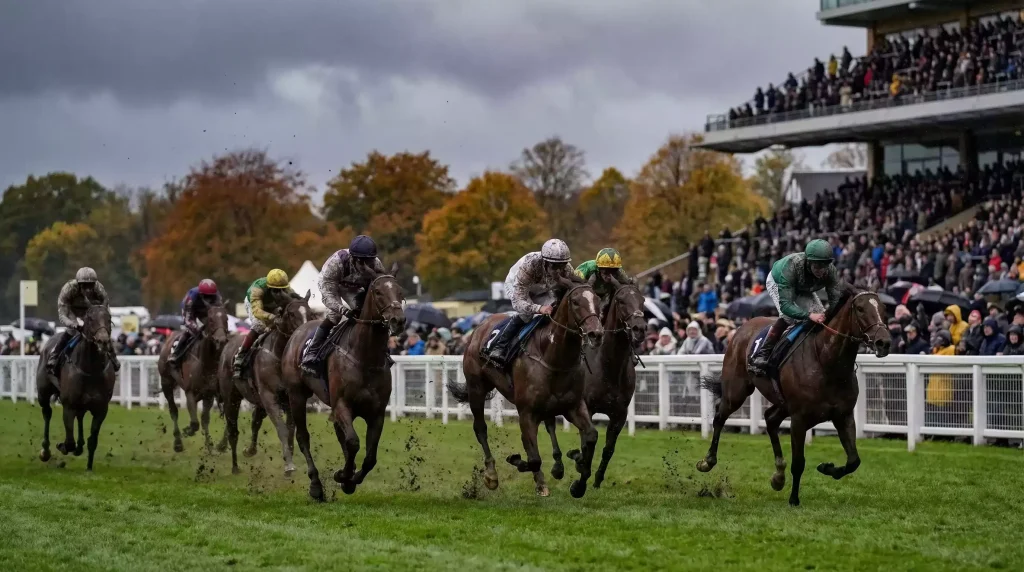
The Season’s Grand Finale
Ascot Champions Day betting offers the chance to engage with flat racing’s final major championship event. Staged on a single Saturday in mid-October, British Champions Day concentrates five Group 1 races onto one extraordinary card. The day crowns divisional champions while the ground—typically soft after autumn rains—creates conditions distinct from Royal Ascot’s summer racing.
The meeting attracts significant attention. Ascot Racecourse welcomes over 500,000 visitors annually, making it Britain’s most-attended racecourse. Champions Day accounts for a substantial portion of that figure as casual fans join serious bettors for the season’s conclusion.
The betting environment differs from June. As HBLB Chief Executive Alan Delmonte has noted, there has been a material change in the industry environment with turnover down by around 20% in two years. Against this backdrop, Champions Day concentrates remaining betting activity into a single marquee event—creating liquidity despite the broader market decline.
Understanding what makes Champions Day unique improves selection quality. The horses arriving have raced all season. Some are peaking; others are tailing off. The soft ground transforms form patterns—horses who excelled in summer conditions may struggle, while autumn specialists finally find conditions to suit. These dynamics create value for those who adjust their analytical approach.
The stakes are high. Championship bonuses reward horses who’ve accumulated points through the British Champions Series. Final standings determine reputations. Trainers and jockeys compete for season-ending titles. Every participant arrives with motivation beyond the day’s prize money. For bettors, this intensity translates into predictable effort—no one is coasting through a season finale.
QIPCO Races: Championship Context
The five Group 1 races on British Champions Day carry QIPCO sponsorship and championship significance. The Champion Stakes, Queen Elizabeth II Stakes, British Champions Sprint, Champions Fillies & Mares Stakes, and British Champions Long Distance Cup each crown a divisional champion while contributing to season-long series standings.
The Champion Stakes over ten furlongs typically draws the strongest field. Middle-distance horses who’ve contested the Irish Champion, Juddmonte International, or Eclipse gather for a final showdown. Arc contenders sometimes use Champions Day as either a prep or a follow-up, depending on autumn plans. The field quality ensures that form from earlier Group 1 races translates directly—class tells in a championship.
The QEII Stakes brings together the season’s best milers. Unlike the Champion Stakes, this race occasionally lacks a dominant favourite, creating betting opportunities when several horses hold comparable claims. The mile trip attracts speed horses capable of sustaining their effort over autumn ground—a different proposition from June’s firm surfaces.
The Sprint Championship suits specialists. Six furlongs on soft ground differs dramatically from six furlongs on good to firm. Horses who’ve won summer sprints on quick ground may struggle to handle the conditions. Conversely, autumn specialists who’ve been waiting for give in the ground finally find their optimal conditions.
The Long Distance Cup over two miles tests stamina extremes. This race often features horses who’ve contested the Gold Cup at Royal Ascot or similar staying races. The ground amplifies the stamina test—staying on strongly through soft ground requires genuine reserves.
Series bonuses create additional motivations. A horse competing for a championship title will run their race. Connections aren’t experimenting or testing conditions—they’re executing plans built across the entire season. This focus produces consistent effort that rewards form-based selection.
Soft Ground Angles: Autumn Specialists
October at Ascot rarely produces fast ground. Autumn rains typically leave the track soft or heavy—conditions that fundamentally alter form analysis. On soft ground, the track’s stands’ side bias becomes more pronounced, creating draw advantages more significant than in summer racing. Horses suited to testing conditions gain an edge that form figures from firm-ground races don’t capture.
Identifying soft-ground specialists requires examining form specifically on similar going. A horse who won a Group 2 on good to firm in July may have proven class but no evidence they handle cut in the ground. A horse who won a Group 3 on heavy in April has less raw form but demonstrated ability on relevant conditions. Champions Day often produces results that seem surprising until you examine going preferences.
Breeding indicates ground preference. Certain sire lines produce horses who relish soft ground—their action suits the conditions, their stamina reserves allow them to gallop through testing surfaces. European bloodlines traditionally produce more soft-ground specialists than those bred for American racing’s faster surfaces. Check each runner’s pedigree for indicators.
Jockey bookings sometimes signal ground expectations. Elite jockeys choose mounts partly based on expected conditions. If a leading jockey abandons a summer star for an autumn specialist, that decision reflects assessment of what conditions suit. These signals don’t guarantee outcomes but inform analysis.
The stands’ side bias on soft ground affects draw assessment. Races on the straight course—particularly the QEII Stakes over a mile—see higher stalls gain advantage as ground conditions deteriorate. Cross-reference draw position with going reports closer to race day. A horse with a low draw who needs give in the ground faces compounded disadvantages.
Prepare for ground variability. Forecasts change; autumn weather is unpredictable. If rain arrives heavily, recalibrate. If an unexpected dry spell produces better ground than expected, reassess. Flexibility beats rigid predictions when conditions drive outcomes.
End-of-Season Form Reversals
By October, some horses have declined from their summer peaks. Others have finally found form after slow starts. Distinguishing genuinely improving horses from those whose apparent progression reflects easier opposition is critical for Champions Day selection.
Watch for signs of regression. A horse who won brilliantly in June but ran listlessly in September may have peaked and passed. The exertions of a full summer campaign—multiple races at the highest level—leave some horses unable to reproduce their best when October arrives. Training patterns and recovery times matter; not every horse maintains form across seven months of racing.
Conversely, some horses improve as autumn approaches. Late-developing types who needed the season to mature sometimes produce career-best efforts at Champions Day. Lightly raced horses who’ve been carefully managed may arrive fresher than rivals who’ve contested every major midsummer race. Identify these potential improvers through racing patterns—fewer runs at lower intensity might indicate deliberate targeting.
Irish and French challengers complicate form assessment. International horses arrive having raced on different tracks under different conditions. Their form may be more or less relevant depending on how similar their preparation races were to what Champions Day presents. An Arc winner who then contests the Champion Stakes carries proven class; an Irish runner stepping up from Group 3 company is hoping the conditions unlock hidden ability.
Trainer form in October matters specifically. Some trainers excel at keeping horses competitive through long seasons. Others peak their charges for summer targets and struggle to revive them in autumn. Identify trainers with strong Champions Day records—they understand how to prepare horses for the specific demands of late-season championship racing.
Three-year-olds meeting older horses face the season’s final test. The allowances may favour youth, but older horses bring experience of similar conditions and tactical awareness developed over multiple campaigns. Assess each three-year-old’s autumn form specifically—June brilliance doesn’t guarantee October resilience.
Champions Day Selection Framework
Begin with ground assessment. Check the going and forecast—then filter the field by ground suitability. Horses with no form on soft or heavy ground face a significant obstacle that class alone may not overcome. Horses with proven soft-ground form start from a stronger foundation.
Assess recent form trajectory. Is each runner improving, maintaining, or declining? A horse who ran career-best last time out differs from one who’s been easing down since August. Weight recent runs heavily—they reveal current condition better than summer peak performances do.
Consider draw position for straight-course races. Higher stalls provide advantage on soft ground. Factor this into selections for the QEII and any straight-course supporting races. Round-course races are less draw-dependent.
Identify trainer intentions. Championship bonuses motivate maximum effort. A trainer running a horse for the series title versus one running a recovery race after Arc disappointment brings different expectations. Public statements, entry patterns, and jockey bookings reveal intent.
Evaluate price relative to assessed chance. Champions Day attracts strong markets with efficient pricing. Finding value requires identifying where the market has underweighted ground suitability, form trajectory, or draw advantage. If you can’t find a clear reason to oppose the favourite, the favourite may represent fair value.
Treat the day as five separate puzzles. Each race presents distinct conditions and form profiles. The Champion Stakes rewards class; the Sprint Championship rewards ground specialists. Don’t apply a single approach across all five Group 1s. Adapt your framework to each race’s specific demands.
Champions Day ends the season. Approach it with the accumulated wisdom of the year’s racing—and the recognition that autumn conditions create opportunities unavailable in summer. The horses who peak in October aren’t always the horses who peaked in June. Finding them is the challenge and the opportunity.
Ascot Champions Day Betting — More on this topic at ascot races betting.
See also Responsible Gambling at Royal Ascot.
