
Royal Hunt Cup Strategy: Decoding the Premier Mile Handicap
Best Horse Racing Betting Sites – Bet on Horse Racing in 2026
Loading...
The Premier Mile Handicap
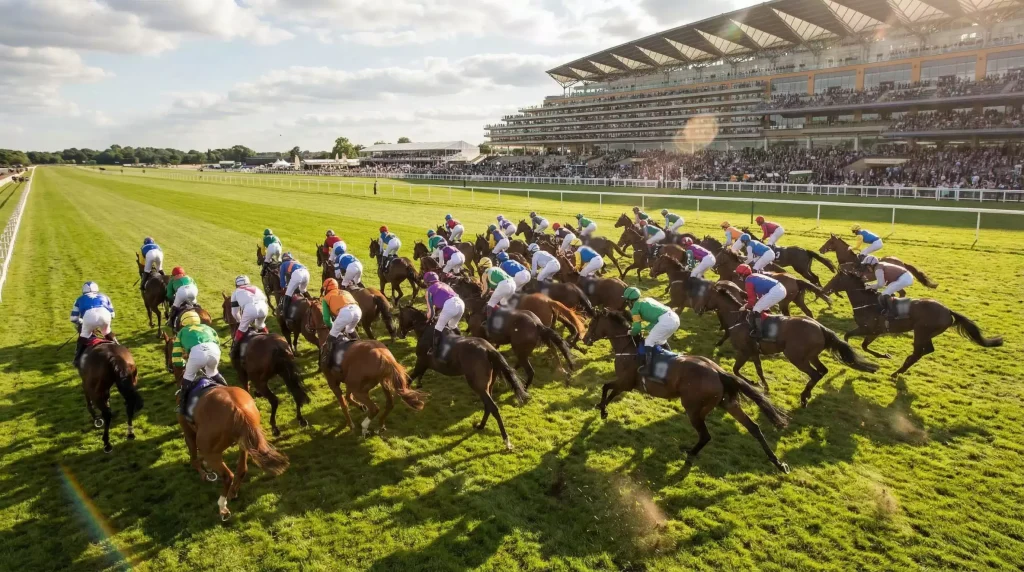
Wednesday at Royal Ascot belongs to the Royal Hunt Cup. While Group 1 races attract the purists and journalists, the Hunt Cup pulls in the masses—punters who want a competitive handicap with thirty runners, decent prices, and genuine uncertainty. First run in 1843, this one-mile cavalry charge has ruined more ante-post vouchers than any race at the meeting. It has also delivered some of the most celebrated betting coups in racing history.
A Royal Hunt Cup strategy requires accepting fundamental chaos. With thirty horses breaking from stalls, tactical disasters occur regularly. Traffic problems strand horses with no run. Pace collapses strand closers who have nothing to finish past. Ground conditions favour one side of the track unexpectedly. No single system eliminates these variables. The goal is not perfection but edge—finding selections whose chances exceed their odds often enough to generate profit.
Handicap favourites at Royal Ascot actually perform reasonably well. OLBG data shows a level stakes profit of +£4.08 backing handicap market leaders over five years, with a 23.44% strike rate. The Hunt Cup’s large field dilutes this edge somewhat, but it reminds us that even in chaos, the market identifies live contenders effectively. Your task is deciding whether to trust it or find overlooked value.
Draw in 30-Runner Fields: Where to Look
The Royal Hunt Cup’s draw bias defies simple characterisation. Over a mile on the straight course, neither extreme favours consistently. Level stakes profit analysis from OLBG reveals that stall 6 at one mile produces the worst returns: LSP of -55.50 over five years. That single data point should discourage blind backing of any horse drawn six. Beyond specific stalls, middle draws often provide tactical flexibility that extreme positions lack.
Ground conditions influence draw significance more than static analysis suggests. On good to firm ground, the track plays relatively fair—horses can race anywhere. When ground softens, a stands’-side bias tends to emerge, favouring higher-numbered stalls. The bias is not guaranteed, but it occurs frequently enough that ignoring it invites unnecessary disadvantage. Before the Hunt Cup, check conditions. If overnight rain has arrived, adjust your weighting toward horses drawn middle-to-high.
Consider position relative to anticipated pace. A horse drawn low might suit if they show early speed and can establish position on the rail without fighting. A held-up horse drawn low faces risks: traffic congestion, no space to switch, arriving too late. The same horse drawn high can swing wide, avoid trouble, and deliver a clear run in the final two furlongs. Read the draw through the lens of running style, not merely numerical position.
Group the field into zones. Stalls 1-10 represent inside. Stalls 11-20 represent middle. Stalls 21-30 represent outside. Examine how many runners in each zone typically hold up, press the pace, or lead. If most front-runners cluster low while closers draw high, pace may concentrate inside, leaving the stands’ rail open for late challenges. Such analysis takes ten minutes and can meaningfully inform selection.
Weight and Rating Trends
Hunt Cup winners span the weight range, but patterns emerge. Topweights carrying 10 stone or more face a stiff task in such competitive company. The handicapper has assessed them as the best horses in the race, but the burden is real—approximately ten pounds translates to roughly a length over a mile. A topweight must overcome that deficit against adequately weighted rivals who may be improving or well handicapped.
Well-handicapped is the operative phrase. The ideal Hunt Cup candidate is a horse whose official rating underestimates their current ability. This occurs in several ways: a horse returning from a break who showed improved form before it, a progressive three-year-old receiving weight-for-age allowances against older rivals, or a horse who has changed yards to a trainer known for improving recruits. Identifying these profiles before the market does constitutes the core of profitable handicap betting.
Three-year-olds carrying ten stone seven pounds or less regularly outperform expectations. Their weight allowance against older horses compensates for their relative inexperience. When a lightly raced three-year-old with upward trajectory enters the Hunt Cup, they often represent value even if the market has noticed them. Conversely, battle-hardened six-year-olds carrying nine stone ten pounds have typically established their level. Unless circumstances have changed—new trainer, new distance, new tactics—they are unlikely to surpass expectations.
Examine the ratings band. If the top-rated horse carries 94 and the bottom carries 74, the spread is normal. If the spread is tighter—say, 94 to 82—then the field is more compressed, and class differences diminish. Compressed spreads favour outsiders; wider spreads favour those at the top.
Pace Scenarios: Front-Runners vs Closers
Thirty runners guarantee a strong early pace. Multiple horses will attempt to grab position from their stalls, each jockey knowing that being caught wide without cover invites trouble. The first two furlongs of the Hunt Cup are frequently chaotic, with established positions only crystallising at the halfway marker. This intensity suits horses who can relax early—those who burn energy in the scramble rarely sustain their effort.
Front-runners face a tactical conundrum. Leading from stall one means hugging the rail and potentially facing trouble if the pace collapses. Leading from stall thirty means crossing the entire track, expending energy that might be decisive in the final furlong. The sweet spot sits around stalls eight through fifteen: close enough to the rail to be efficient, far enough to avoid immediate congestion, and able to establish position without excessive effort.
Closers who come from off the pace need racing room. In a thirty-runner field, finding room is not guaranteed. A horse who races mid-division before producing a turn of foot requires gaps to appear. If the field fans across the track, gaps open; if runners cluster, they close. This uncertainty is why each-way betting suits the Hunt Cup—place terms typically extend to five or six places, and a horse who finds trouble can still hit the frame after a compromised run.
Pace collapse changes everything. If front-runners stack up and slow the race, closers have nothing to run past. Moderate early fractions can turn the Hunt Cup into a sprint from the two-furlong pole, favouring those who quickened naturally rather than those who need something to chase. Track the pacemakers in your form study. If no genuine front-runner is present, expect a slowly run race.
Building Your Hunt Cup Selection
Apply the filters sequentially. First, remove horses drawn in stall six or immediately adjacent if they lack tactical speed to overcome that statistical disadvantage. Second, remove topweights unless their class clearly exceeds the field—a Group 3 winner dropping into a handicap might carry ten stone six pounds and still dominate. Third, identify well-handicapped candidates using the profiles above: progressive three-year-olds, returning horses, trainer moves.
Cross-reference draw with running style. A held-up horse from stall three warrants scepticism. A front-runner from stall twenty-five warrants scepticism. Horses whose draw suits their style advance. Horses fighting their draw face additional obstacles.
Consider multiple selections. The Hunt Cup’s complexity makes single-selection confidence dangerous. Two or three selections at prices between 12/1 and 25/1 can collectively offer better expected value than one selection at 8/1. Each-way betting spreads risk further: covering the frame across multiple runners accounts for traffic incidents, tactical failures, and the inherent randomness of cavalry charges.
Finally, maintain discipline regarding stake size. The Hunt Cup tempts aggressive betting—the prices look attractive, the race feels solvable, and confidence can swell without foundation. Responsible Royal Hunt Cup strategy caps stakes at levels that protect the overall week’s bankroll. Win or lose, Wednesday afternoon must leave enough capital to continue betting intelligently through Thursday, Friday, and Saturday. The Hunt Cup is a single race, not the entire meeting.