
King George Stakes Betting: Britain's First £2 Million Race
Best Horse Racing Betting Sites – Bet on Horse Racing in 2026
Loading...
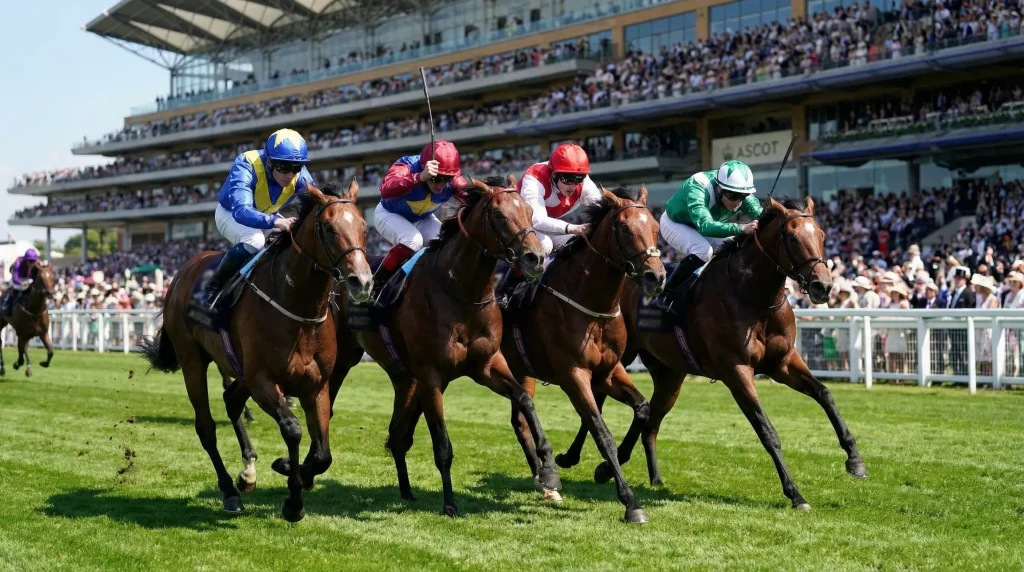
Britain’s First £2 Million Race
King George Stakes betting in 2026 carries unprecedented weight. Ascot has announced that this year’s renewal will carry a prize fund of £2 million—making the King George VI and Queen Elizabeth Stakes the first British race to offer that figure. The money reflects the race’s status as flat racing’s midsummer championship, and it will attract a field worthy of that investment.
The King George sits in late July, positioned between the classic season and the autumn championships. It asks whether the best three-year-olds—fresh from Derby, Oaks, and the June trials—can compete against proven older horses who’ve already established themselves at the highest level. That generational clash defines the race.
Twelve furlongs at Ascot in midsummer presents a specific challenge. The round course demands stamina through undulations and a testing uphill finish. Ground conditions can vary dramatically—good to firm in dry summers, soft or heavy when rain arrives. Winners must handle whatever conditions July provides while also overcoming the strongest competition the European middle-distance division can assemble.
Historic winners include Enable, who won the race three times; Galileo, Montjeu, and Dancing Brave—horses whose King George victories confirmed their place among the sport’s greats. The race identifies true champions. Pretenders are exposed when the pressure builds in the final furlongs.
For bettors, the King George offers a relatively small field of elite performers. Pricing is tight because quality is known. The challenge is identifying which horse peaks on the day, which handles the ground, and which race dynamics suit your selection. £2 million ensures connections will bring their best. Whether that best is good enough depends on the factors we’ll examine.
Three-Year-Olds vs Older Horses: Age Clash
The King George’s defining feature is its open age structure. Three-year-olds receive a weight allowance—typically 9lb from older horses in July—designed to compensate for their relative immaturity. Whether that allowance accurately reflects the gap between generations varies from year to year, creating the race’s central betting puzzle.
In exceptional three-year-old crops, the Derby and Oaks winners arrive with such superiority that the allowance becomes generous. They’ve already beaten their peers comprehensively; the older horses they face may not be at the same level. Recent years have seen three-year-olds dominate the King George when the classic form proved exceptionally strong.
In weaker three-year-old years, experience tells. Older horses have raced through the summer, maintaining fitness while the three-year-olds peak for the classics and may bounce. The proven performers know Ascot, know racing in July conditions, and know how to settle and deliver their effort when it matters. They’ve faced pressure before and emerged.
Assessing the generation comparison requires examining both groups separately before combining them. How strong was the Derby? Did the winner confirm genuine superiority or benefit from pace and circumstances? How do the older horses compare to previous King George fields? Are we watching a strong cohort of four and five-year-olds, or a thin year where three-year-old class should dominate?
The weight allowance matters most in tight finishes. If a three-year-old and four-year-old of identical ability race to the line together, the three-year-old wins. But identical ability is rare. Class generally prevails in Group 1 competition—the market rarely gets top-level races wrong, with heavily favoured runners winning the majority of championship events. Form analysis must determine whether the allowance compensates for actual quality gaps.
Arc Trial Relevance: Autumn Pointers
The King George functions as the primary European trial for the Prix de l’Arc de Triomphe in October. Connections targeting the Arc often route their horses through Ascot in July, seeking both prize money and confirmation that their charge handles the trip and the level. This autumn objective shapes how trainers approach the King George.
Some horses are brought to their peak for the King George itself, with autumn races considered afterwards. Others are prepared with the Arc as the ultimate goal, treating Ascot as a prestigious stepping stone. The difference shows in conditioning. A horse trained to the minute for July may not reproduce that form in October. One prepared with autumn in mind might have something in reserve.
Identifying trainer intent requires examining public statements, racing patterns, and stable tendencies. Aidan O’Brien often uses the King George as part of a broader campaign, running multiple horses to assess which suits autumn targets. John and Thady Gosden have prepared King George winners with precision timing that sometimes limits autumn campaigns. French trainers may target the race as their horse’s midsummer peak.
For bettors focused solely on the King George, trainer intent matters because it affects preparation. But it also creates opportunities. A horse presented as an Arc trial—running to learn the trip, gain experience, build towards peak form later—might drift in the market even if its ability warrants shorter odds. The market discounts the trial narrative without always assessing whether the horse could win regardless.
Past Arc winners who used the King George as a preparation include Enable and Workforce. They demonstrated that a horse can win both—the trial narrative doesn’t preclude victory. But the betting angle exists in how the market interprets connections’ statements versus actual racing capability.
Ground Preferences in July
July in Berkshire delivers variable conditions. Hot summers produce quick ground where speed holds up and front-runners can dictate. Wet spells create testing conditions that favour stamina and horses who handle cut in the ground. The King George has been run on everything from firm to heavy within the same decade.
Ground preferences significantly affect performance over twelve furlongs. A horse whose action suits quick ground may struggle to sustain pace through soft conditions. Conversely, a mudlark who thrives on give might find firm ground too fast, unable to settle into the rhythm that produces their best.
Examine each runner’s going record. Has the horse won on similar conditions to those expected? Have they failed on unsuitable ground? A horse with a perfect record on good but no experience of soft faces uncertainty if rain arrives. One whose best form came with significant ease in the ground might not reproduce it on a quick July surface.
Weather forecasting becomes part of pre-race analysis. Check predictions throughout the week before the King George. Ground conditions can change rapidly—heavy rain on Friday alters a good surface dramatically. Early prices reflect expected conditions; late moves reflect actual going. If you hold an ante-post bet struck on assumptions of good ground, reassess when the going report confirms something different.
Some horses handle all conditions. They’re rare and valuable. A King George contender with proven form on both extremes—firm and soft—removes one variable from the equation. That versatility might justify shorter odds because it reduces the risk that conditions on the day don’t suit.
The uphill Ascot finish amplifies ground effects. In testing conditions, the climb from the false rail to the winning post stops tired horses. Those with stamina reserves and ground suitability accelerate where rivals falter. If rain arrives, adjust expectations towards horses with stamina pedigrees and proven soft-ground form.
King George Selection Framework
Start with proven class. The King George demands Group 1 ability. List each runner’s best performance and the level it represents. Horses with genuine top-level form deserve primary consideration. Those stepping up from Group 2 or Group 3 must show exceptional potential to overcome the class gap.
Assess the age comparison. How does this year’s three-year-old form compare to the older horses assembled? Does the weight allowance fairly compensate for any quality gap? A brilliant three-year-old might overcome it regardless; a marginal classic winner might find older Group 1 horses too strong even with the allowance.
Check ground suitability. Match runners to expected conditions. If the going favours certain ground preferences, weigh that advantage. If a horse has never raced on the prevailing ground, that uncertainty introduces risk the market may or may not reflect.
Consider trainer intent and timing. Is this horse peaking now or being prepared for autumn? A trainer targeting the King George specifically brings a sharper horse than one using it as a development run. Both can win, but preparation philosophy affects the probability.
Finally, evaluate price against probability. The King George typically features tight markets because the field is select and well-known. Finding value requires identifying where the market has mispriced the class comparison, ground impact, or tactical setup. A horse that appears fairly priced might become value if rain changes the going to suit them specifically.
The King George rewards precision. Small fields, elite horses, significant money—every decision carries weight. Approach the race with the seriousness £2 million demands, and your analysis will be sharper than those treating it as another bet to place.