
Prince of Wales's Stakes Tips: Betting the Million-Pound Mile-and-a-Quarter
Best Horse Racing Betting Sites – Bet on Horse Racing in 2026
Loading...
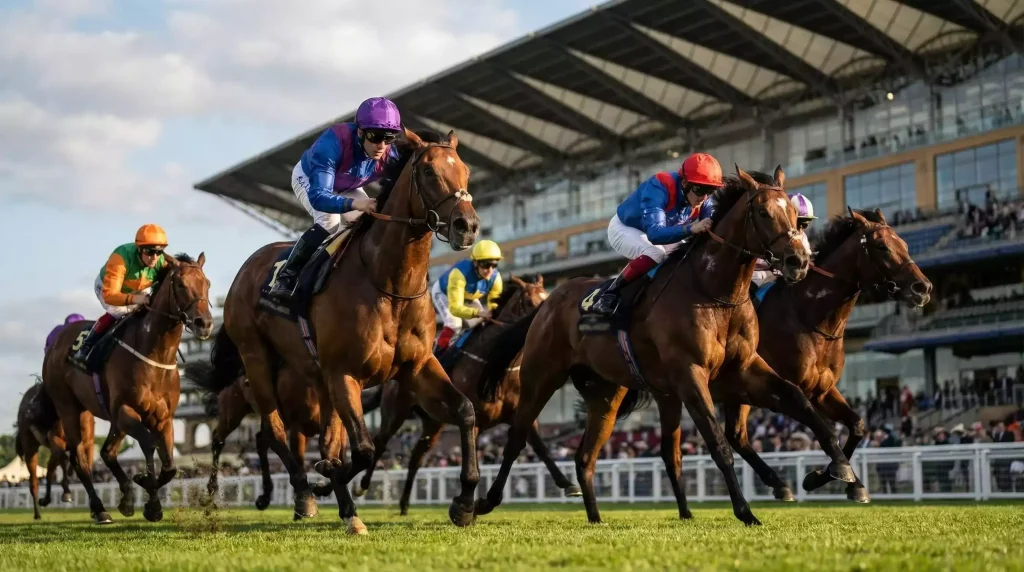
Wednesday’s Million-Pound Showpiece
The Prince of Wales’s Stakes sits at the heart of Royal Ascot, both literally and figuratively. Staged on Wednesday afternoon, it anchors the middle day of the festival with a prize fund of £1 million—money that attracts Europe’s finest middle-distance performers. For those seeking Prince of Wales’s Stakes tips, understanding what separates contenders from pretenders begins here.
Ten furlongs at Ascot demands a specific profile. The round course features an uphill finish that punishes horses lacking true stamina for the trip, yet the distance remains short enough that pure stayers find themselves outpaced in the closing stages. The winners combine mile speed with the ability to sustain that pace over an extra quarter-mile. It’s a rare blend, which explains why the same horses tend to contest this race repeatedly during their careers.
The field size typically runs between six and ten runners. This isn’t a cavalry charge; it’s a select gathering of established Group performers. The small field concentrates quality but limits betting options. There’s no hiding in the pack. Every runner faces genuine scrutiny, and the market reflects that transparency with relatively tight pricing on the principals.
Historical winners read like a roll call of the sport’s elite: Enable, Poet’s Word, Highland Reel, Coral-Eclipse winners and Champions Stakes contenders. The Prince of Wales’s functions as a mid-season championship for the ten-furlong division, offering a platform for horses stepping up from mile campaigns or stepping down from twelve furlongs. Either route can produce winners, but the horse must demonstrate proven class at the highest level.
Wednesday afternoon at Ascot represents the intersection of quality and opportunity. The race rewards homework. Those who understand the form dynamics and pace scenarios enter with an edge over casual observers backing a name.
Distance Specialists: 10f Form Lines
The ten-furlong trip occupies awkward territory in the racing calendar. Most prestigious races sit at either a mile or a mile-and-a-half, leaving ten-furlong horses searching for appropriate opportunities. The Prince of Wales’s Stakes is their championship—the defining test of who excels at this intermediate distance.
Horses arrive via two primary routes. Some drop from twelve furlongs, having shown enough speed to suggest the shorter trip suits. Derby runners who couldn’t sustain the stamina test of Epsom sometimes flourish over ten. Others step up from a mile, typically after running Group 1 races at that trip with enough resilience to suggest they’ll handle the extra distance. Both paths can deliver winners, but the evidence must be clear.
Look specifically for ten-furlong form, not assumed versatility. A horse who won a Group 2 over this exact trip carries proven credentials. A horse whose best form came over a mile and a half, with connections hoping the drop in distance sharpens their turn of foot—that’s a speculation rather than a selection. The Prince of Wales’s punishes guesswork about trip suitability.
International form lines require careful translation. French ten-furlong races often run at a different tempo than British equivalents. American shippers arrive from different racing surfaces. Irish form typically tracks British form closely, making cross-channel comparisons more reliable. The key is identifying whether the horse has demonstrated both the speed and the stamina the Prince of Wales’s demands, regardless of where that evidence originated.
Previous Ascot form carries weight. The track’s uphill finish and undulating round course don’t suit every horse. Course winners or placed horses demonstrate they handle the specific demands. A horse who excelled at Longchamp or the Curragh may struggle with Ascot’s idiosyncrasies, or may thrive—prior course experience removes that uncertainty.
The distance specialists win this race. Versatile types who’ve bounced between trips without dominating any of them rarely succeed when facing true ten-furlong horses in their championship event.
Class Tells: Group 1 Credentials Required
The Prince of Wales’s Stakes is a Group 1 race, and Group 1 form is effectively mandatory for serious contenders. Across Royal Ascot’s eight Group 1 races, 40 of the last 48 Group 1 winners started at 6/1 or shorter. The market knows which horses possess the class to compete at this level, and outsiders rarely prove the market wrong.
This statistic shapes betting strategy directly. If your selection is double-figure odds in a Group 1, something significant must justify that price. Perhaps connections believe the horse has improved beyond its recent form. Perhaps ground conditions suit specifically. Without a concrete explanation for why the market is wrong, backing long-priced runners in races like the Prince of Wales’s shows a negative long-term expectation.
Class manifests as the ability to sustain high cruising speed under pressure. In a small-field Group 1, every horse can quicken. What separates winners is whether they can maintain that acceleration to the line when rivals respond. Horses with only Group 2 or Group 3 form have typically not faced that level of sustained pressure. The step up in grade often exposes limitations invisible against lesser opposition.
Examine each runner’s best performance. At what level did it occur? Against which horses? Under what circumstances? A Group 1 winner arriving off a defeat in a weaker race may still represent more class than a Group 2 winner in career-best form. The form book measures results; class measures ceiling. The Prince of Wales’s asks horses to reach their ceiling.
Horses winning their first Group 1 in the Prince of Wales’s do exist, but they typically arrive with exceptional Group 2 form—dominant performances that suggest the class was always present, just unconfirmed. A horse scraping into places at Group 2 level rarely transforms into a Group 1 winner overnight. Progression exists, but it follows patterns.
Pace Setup and Running Styles
Small fields create tactical races. Without the mid-pack anonymity available in larger handicaps, every runner’s position is visible and contestable. The Prince of Wales’s often turns on whether the pace unfolds truly or whether tactical maneuvering produces a sprint finish that favours closing runners.
Identifying the likely pace scenario requires examining running styles. If two or three horses have led in their recent races, genuine early pace seems likely. If the field contains multiple hold-up horses with only one front-runner, that leader may be allowed an easy time—setting up the race for closers, unless the leader has enough class to steal it from the front.
Ascot’s round course adds complexity. The home turn into the straight requires horses to be positioned to strike. Those too far back risk giving the leader an unassailable advantage. Those too close to a fast pace risk emptying before the line. The ideal position is close enough to challenge but not so close that the pace wears you down. Jockeys who know the track balance these demands; first-time Ascot riders sometimes misjudge.
Ground conditions influence pace. Soft or heavy ground punishes early leaders who’ve exerted themselves through demanding conditions. Good to firm ground often produces faster fractions with less degradation, making front-running more viable. If rain arrives before the Prince of Wales’s, recalibrate your pace expectations. What looked like a leader’s race on fast ground becomes a test of stamina in testing conditions.
Running style also correlates with temperament. Some horses settle easily and accelerate when asked. Others pull hard early and expend energy fighting their jockeys. In a small-field tactical race, the composed horse holds an advantage—energy preserved for the finish rather than wasted in the early stages. Paddock observation, where possible, offers insight into which horses are relaxed and which are wound tight.
Selection Approach for the Prince of Wales’s
Start with class. List each runner’s highest-level victory. Immediately, the field divides between proven Group 1 performers and those seeking to confirm that status. The former deserve primary consideration; the latter require a compelling reason to include.
Assess distance credentials. Has the horse won convincingly at ten furlongs? Has it shown the blend of speed and stamina the trip demands? A horse whose best form sits at either eight furlongs or twelve furlongs is hoping to prove something against rivals with established credentials at the exact trip.
Construct the pace scenario. How will the race unfold? Which running styles suit that likely shape? If the pace looks genuinely strong, closers with proven finishing speed gain appeal. If the field lacks early pace, hold-up horses risk being caught flat-footed when the speed finally arrives.
Factor ground. Check the going report and forecast. Does your selection appreciate the prevailing conditions? A soft-ground specialist on good to firm—or vice versa—faces a significant obstacle regardless of other credentials.
Finally, consider price. Given the 40/48 statistic for Group 1 winners at short prices, the market’s leading fancies deserve respect. If you’re backing a shorter-priced horse, the bet reflects confidence in proven quality. If you’re backing something at bigger odds, you’re betting on form improvement or circumstance—which can land, but represents higher variance.
The Prince of Wales’s rewards thoughtful assessment rather than adventurous punting. Quality horses at fair prices outperform speculative outsiders over time. Match your selections to that reality and you’re approaching the race with the respect it deserves.