
Ryan Moore at Royal Ascot: When to Follow the Master
Best Horse Racing Betting Sites – Bet on Horse Racing in 2026
Loading...
The Dominant Force
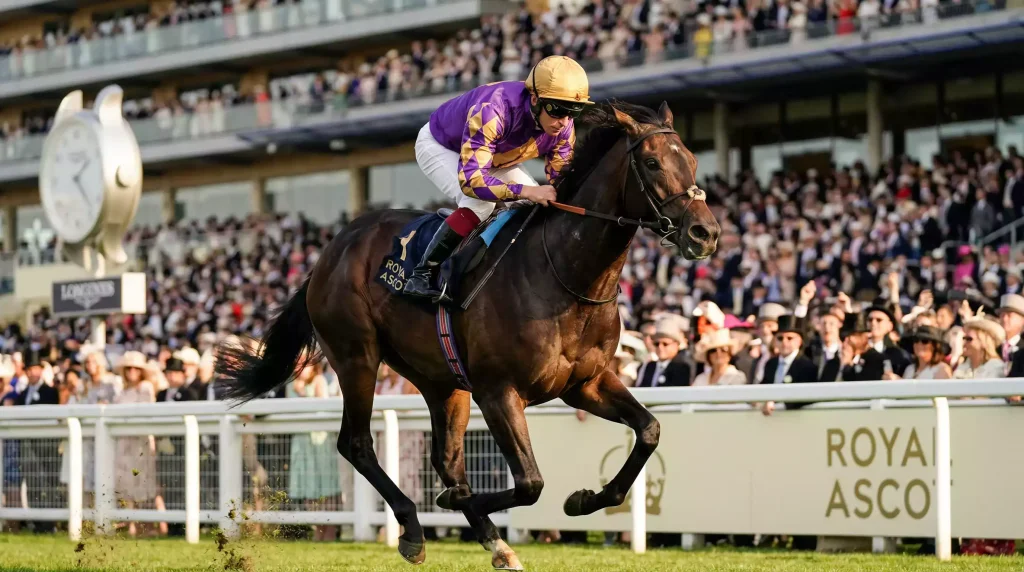
Ryan Moore at Royal Ascot represents the highest level of jockeyship at Britain’s most prestigious flat meeting. His record speaks to sustained excellence across conditions, race types, and decades. No rider in the modern era has accumulated more Royal Ascot victories, and his partnership with the powerful Ballydoyle operation ensures a stream of top-class mounts each June. For bettors, Moore’s presence on a horse signals quality—but signals alone do not guarantee profitable betting.
Moore’s style is distinctive. He rides with exceptional stillness, conserving his horse’s energy while others expend effort in unnecessary movement. His judgement of pace is elite; he positions horses where they need to be, when they need to be there. In tight finishes, his nerve is unshakeable—the ability to wait a fraction longer before committing separates him from lesser rivals. These attributes explain his winners, but they do not explain whether backing him consistently generates returns.
This analysis examines Moore’s Royal Ascot record through a bettor’s lens. Raw win totals matter, but level stakes profit matters more. The question is not whether Moore wins—he does, frequently and impressively—but whether the market prices his mounts accurately or whether value exists either backing him in specific circumstances or opposing him in others. The answer, as with most sophisticated betting questions, depends on context.
56 Winners: Strike Rate vs LSP
The headline statistics reveal complexity. OLBG data shows Ryan Moore has ridden 56 Royal Ascot winners from 2016 to 2025, maintaining an 18% strike rate. That win rate exceeds most jockeys at the meeting and reflects his access to quality mounts from the sport’s leading yards. Yet the level stakes profit from backing all Moore rides stands at -£53.95. The discrepancy demands explanation.
Moore rides many short-priced horses. As first-choice jockey for Aidan O’Brien and a sought-after freelance, he secures mounts on market leaders regularly. When a 4/6 favourite wins, the return barely covers the stake. When that favourite loses, the entire stake vanishes. The mathematical reality is that high strike rates at short prices can still produce losses. Moore wins frequently but often at odds that require near-perfection to generate profit.
The volume of rides also affects the picture. Moore takes multiple mounts per day across the five days of Royal Ascot. Some are genuine fancies; others are lesser chances from powerful yards. Backing every ride conflates these categories. A more selective approach might reveal different returns—but the blanket statistic cautions against assuming that quality jockeyship equals betting value.
Context matters when interpreting these numbers. Moore’s negative LSP does not mean he should be opposed indiscriminately. It means backing him without discrimination produces losses. The task is finding the subsets where backing him generates positive returns—or identifying where opposing him offers value.
Moore + O’Brien: The Group 2 Sweet Spot
The partnership between Moore and Aidan O’Brien at Ballydoyle produces extraordinary results in specific race types. Analysis from OLBG reveals that Moore riding for O’Brien in Group 2 races achieves a 26% strike rate with an LSP of +£25.98. This combination generates profit where backing Moore generally does not.
Why does Group 2 produce different outcomes? Several factors align. Group 2 races attract fewer short-priced favourites than Group 1 contests, where O’Brien’s runners often start odds-on. The prices are longer, meaning winners return more per stake. Simultaneously, the quality gap between O’Brien-trained horses and rivals remains significant—perhaps more significant than in Group 1 where every yard sends its best, or in handicaps where weights compress ability.
The pattern suggests an actionable strategy. When Moore rides for O’Brien in a Group 2 at Royal Ascot, historical data supports backing them. The strike rate is strong, and the prices have been sufficient to generate profit. This specific filter—trainer, jockey, race class—transforms Moore from a losing proposition overall into a winning one.
Group 3 and Listed races show different patterns. The edge diminishes, prices compress, and the returns approach neutral. Group 1 contests see Moore frequently on beaten favourites whose short prices cannot absorb defeats. The Group 2 sweet spot is precise: neither too short to kill value nor too exposed to lose class advantage.
When to Oppose: Short-Price Caution
Moore’s negative LSP overall implies that laying certain Moore mounts may offer value. The principle is straightforward: if backing produces losses, opposing might produce gains. However, laying requires precision. Laying every Moore ride would incur liability when his frequent winners come in. The approach must be selective.
Odds-on Moore mounts in big-field handicaps represent potential laying opportunities. His ability cannot overcome the chaos of thirty-runner races as reliably as in small-field Group events. The favourite’s burden is heavy; the variables are numerous. When Moore rides a 4/5 shot in a cavalry charge, the price rarely reflects the genuine uncertainty. Laying at such odds, accepting liability to win a small return, exploits this inefficiency.
First-time-out juveniles also warrant scepticism. Moore rides many highly regarded two-year-olds from top yards who have never raced. The market prices their home reputation; the reality may differ. A debutant with brilliant homework might freeze on race day, object to the crowd, or fail to break cleanly. Moore’s skill cannot compensate for a horse who has not yet learned to race. Opposing short-priced newcomers can produce value.
Caution is essential. Moore wins enough to punish reckless layers. Any opposing strategy must accept losses when he delivers and maintain discipline over sufficient sample sizes. Opposing Moore is not about predicting individual failures but about identifying systematic overpricing.
Practical Moore Strategy
A nuanced Ryan Moore Royal Ascot strategy combines the insights above. Back Moore when riding for O’Brien in Group 2 races—the data supports this approach over a meaningful sample. Consider opposing short-priced Moore rides in big-field handicaps and on unraced juveniles where prices do not reflect genuine uncertainty. Avoid blanket backing or blanket opposing; both approaches lose money over time.
Track which trainers produce profit when Moore rides for them. O’Brien’s Group 2 pattern is established, but other combinations may exist. UK trainers occasionally secure Moore bookings for their best horses when his Ballydoyle commitments allow; these arrangements sometimes offer value when the market underestimates the horse’s ability relative to its price.
Use Moore bookings as information rather than automatic action. If Moore chooses one O’Brien horse over another in the same race, that decision signals stable opinion about which horse holds the better chance. The horse Moore rides reflects where Ballydoyle believes their best opportunity lies. This intelligence informs betting even if the selected horse does not represent value at its eventual price.
Accept that Moore’s quality is fully reflected in the market. He is not an overlooked talent whose mounts offer hidden value. He is the consensus best jockey at the meeting, and prices reflect that status accurately. Profitable Moore betting requires finding niches—Group 2s, longer-priced mounts, specific trainer combinations—rather than assuming quality equals value. The 56 wins prove his excellence beyond question. The -£53.95 LSP proves that excellence alone does not guarantee betting profit. Both truths coexist, and successful bettors navigate between them.