
St James's Palace Stakes Tips: The Guineas Rematch
 Available in US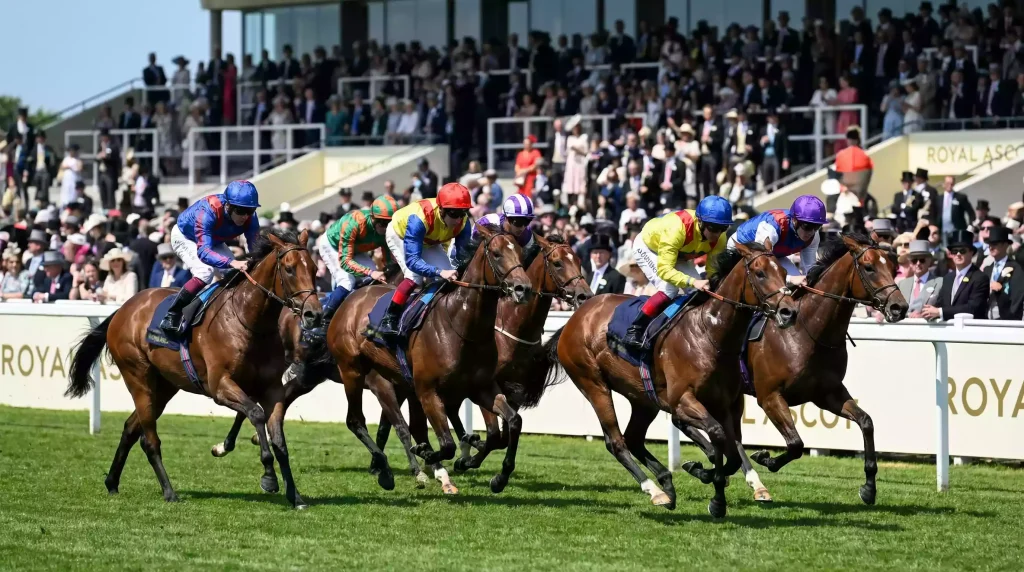
The Colts’ Mile Championship
St James’s Palace Stakes tips matter because this race determines the best three-year-old miler in Europe. Run on Tuesday—the opening day of Royal Ascot—the St James’s Palace brings together Guineas winners and placed horses from Britain, Ireland, and France to settle questions the spring classics left unanswered. The field is select. The quality is exceptional.
As Felicity Barnard, CEO of Ascot Racecourse, observed, Royal Ascot serves as “a window to the world for British racing.” The St James’s Palace Stakes embodies that status. It attracts global attention because it features the best colts of their generation competing on one of racing’s grandest stages.
Historical context underscores the race’s prestige. Frankel won the St James’s Palace before confirming his legend at longer trips. Rock of Gibraltar, Giant’s Causeway, and El Gran Senor—champions across decades—claimed this prize as their generation’s definitive miler. Victory here validates a colt’s place among the sport’s elite.
For bettors, the St James’s Palace Stakes presents a concentrated challenge. Fields typically number between six and ten runners, all of whom have genuine claims based on classic form. The market prices closely; outsiders rarely upset the established order. Across Royal Ascot Group 1 races, 40 of 48 recent winners started at 6/1 or shorter. The race rewards those who correctly assess relative merits rather than those hunting longshots.
Tuesday afternoon at Ascot sets the tone for the entire meeting. The St James’s Palace provides the first Group 1 of the week—a statement of intent from Royal Ascot that quality matters above all. Approaching this race with appropriate respect for its significance shapes how you analyse the runners.
2000 Guineas Form: Classic Reversals
The 2000 Guineas at Newmarket in early May provides the principal form line for St James’s Palace assessment. Most runners will have contested that classic or positioned themselves through alternative routes. The Guineas result isn’t automatically confirmed at Ascot—reversals happen regularly—but it establishes the benchmark against which improvement must be measured.
Form from three-year-old-only races at Royal Ascot shows favourites returning +£17.98 level-stakes profit with a 35.21% win rate. This reflects the reliability of classic form when horses reconvene at the same level. The best colt from Newmarket usually remains the best colt at Ascot. But “usually” leaves room for exceptions that create betting opportunities.
Guineas form requires critical examination beyond the result. Did the winner have a perfect trip? Did beaten colts encounter interference, poor pace, or unsuitable ground? A colt who finished two lengths behind the winner while racing wide throughout might be closer on adjusted merit. One who benefited from a clear rail run might be flattered by the margin.
Improvement between Guineas and St James’s Palace is common. Three-year-olds develop rapidly in the spring. A colt who ran greenly at Newmarket might settle better second time under pressure. One whose fitness was slightly behind may have trained on in the intervening weeks. Trainers who mention that a horse has improved since the Guineas aren’t necessarily talking their book—genuine progression happens.
The weeks between the classics and Royal Ascot also allow connections to reconsider distance preferences. A Guineas runner who finished weakly might be redirected to the Derby rather than risk another mile test. One who finished strongly might confirm mile suitability here before any stepping-up experiments. The St James’s Palace field represents those whose connections believe a mile remains their optimal trip.
Irish and French Classic Form
The St James’s Palace Stakes attracts challengers from the Irish and French classics who didn’t contest the Newmarket Guineas. The Irish 2000 Guineas at the Curragh and the French Poule d’Essai des Poulains at Longchamp produce genuine contenders whose form requires translation to British standards.
Irish form typically maps closely onto British form because the racing populations overlap significantly. Many Irish-trained colts have already raced in Britain; many British horses have contested Irish events. When assessing an Irish Guineas winner or placed horse, you can often find direct form lines through shared opponents. This makes comparison more reliable than with French-trained challengers.
French classic form presents greater uncertainty. French racing operates with different pace scenarios—often slower early fractions with emphasis on finishing speed. A French Guineas winner has proved his class in that context but hasn’t necessarily demonstrated he can handle the different demands of British racing. Some French winners transfer seamlessly; others struggle with the contrast.
Aidan O’Brien’s Ballydoyle operation frequently targets the St James’s Palace with multiple runners who’ve been prepared via Irish routes. O’Brien holds the record for St James’s Palace victories, giving him unparalleled insight into what the race requires. His intended first string—indicated by jockey booking and racing patterns—deserves serious respect. His secondary runners test market and conditions for future campaigns.
Trainer reputation guides international assessment. Andre Fabre or the Aga Khan’s Chantilly operation have produced Royal Ascot Group 1 winners repeatedly; their runners warrant respect. Lesser-known French trainers attempting the cross-channel challenge face a steeper task, as experience at Ascot matters and newcomers lack it.
When British and international classic form converges in the St James’s Palace, the race offers a definitive verdict. The winner emerges as Europe’s champion miler, regardless of where their path originated.
Distance Doubts: Mile Specialists Only
The St James’s Palace Stakes is a mile race. This obvious statement carries significant implications. Colts who display any suggestion of stamina limitations over a mile—weakening finishes, one-paced efforts in the final furlong—face examination. Those who appear to want further may bypass Ascot entirely for middle-distance targets. The runners who assemble represent those whose connections believe a mile is their optimal distance.
Ascot’s round-course mile differs from Newmarket’s straight track. The undulations and uphill finish test stamina more than Newmarket’s galloping surface. A colt who was stopping at Newmarket might struggle further at Ascot. One who was running on powerfully—suggesting extra distance might suit—could find Ascot’s demands closer to their ideal.
Watch running styles relative to pace. In the Guineas, some colts made their effort from the front and were caught; others closed from behind but ran out of ground. The St James’s Palace might unfold differently. If the likely pace is slower, hold-up horses face a sprint finish that benefits different attributes than a truly-run mile would test.
Three-year-old milers often race only a handful of times before connections redirect them to stud careers. The St James’s Palace represents a career-defining moment—perhaps the final opportunity to confirm a colt’s class before commercial considerations dominate. This pressure produces genuine efforts. No one is hiding anything for later.
Be cautious with colts who contested the Derby or its trials between the Guineas and Ascot. While connections sometimes redirect back to a mile after a Derby disappointment, a colt who ran over twelve furlongs three weeks ago may lack the sharpness for a pure mile test. Alternatively, the combination of fitness from the Derby and return to optimal distance might produce improved form. Assess each case individually.
St James’s Palace Selection
Start with classic form. Rank the field by demonstrated ability in the 2000 Guineas, Irish Guineas, and French Guineas. Adjust for any trouble in running or unsuitable conditions that affected performance. The best colt on adjusted form deserves primary consideration.
Look for improvement signs. Has any runner shown evidence of progression since the Guineas? Confident trainer statements, strong workouts, or intervening victories suggest a colt who’s trained on. Three-year-olds improve rapidly; those still developing may outrun their spring form.
Assess international challengers carefully. Irish form translates reliably; French form requires more interpretation. Trainer reputation and experience at Royal Ascot influence how seriously to take continental raiders. Aidan O’Brien’s intended first string merits particular attention given his record in this race.
Confirm distance suitability. Every runner should have proven mile form. Beware colts whose spring efforts suggested stamina concerns at a mile—Ascot’s finish will amplify those doubts. Favour those who finished strongly in the Guineas and appear well suited to this track’s demands.
Examine the likely pace. Small fields produce tactical races. If no obvious pace-setter exists, the race may become a sprint that favours closers with acceleration. If a colt is likely to make the running, the race shape changes—sustained pace tests different attributes than a crawl followed by a dash.
Finally, respect market signals. The St James’s Palace attracts intelligent money. Favourites reflect collective wisdom about class levels. Backing a horse at double-figure odds requires specific reasons why the market is wrong. If those reasons don’t exist, following market leadership shows positive long-term returns in races of this quality.
The championship starts here. Select accordingly.
St James’s Palace Stakes Tips — More on this topic at ascot races betting.
See also Coventry Stakes Betting.
